
A family honors their son’s quiet legacy of perseverance and generosity with a gift to the next generation
By Shannon Urban
Staff Writer
There are some lives that, even in their quietest moments, leave an imprint that does not fade.
And Micah Chetrit’s was one of them.
Micah Orr Chetrit’s middle name is a Hebrew word. It means light. His parents say they always knew it suited him, but it wasn’t until after he was gone that they understood the full extent of its truth, or just how widely that light had spread.
His parents, Cyndi and Guy Chetrit, are not front-row-stage people. That’s how Guy put it himself, sitting down for a conversation on a Tuesday afternoon six months to the day after losing their son. They didn’t hold a large public memorial. They held a small celebration of life.
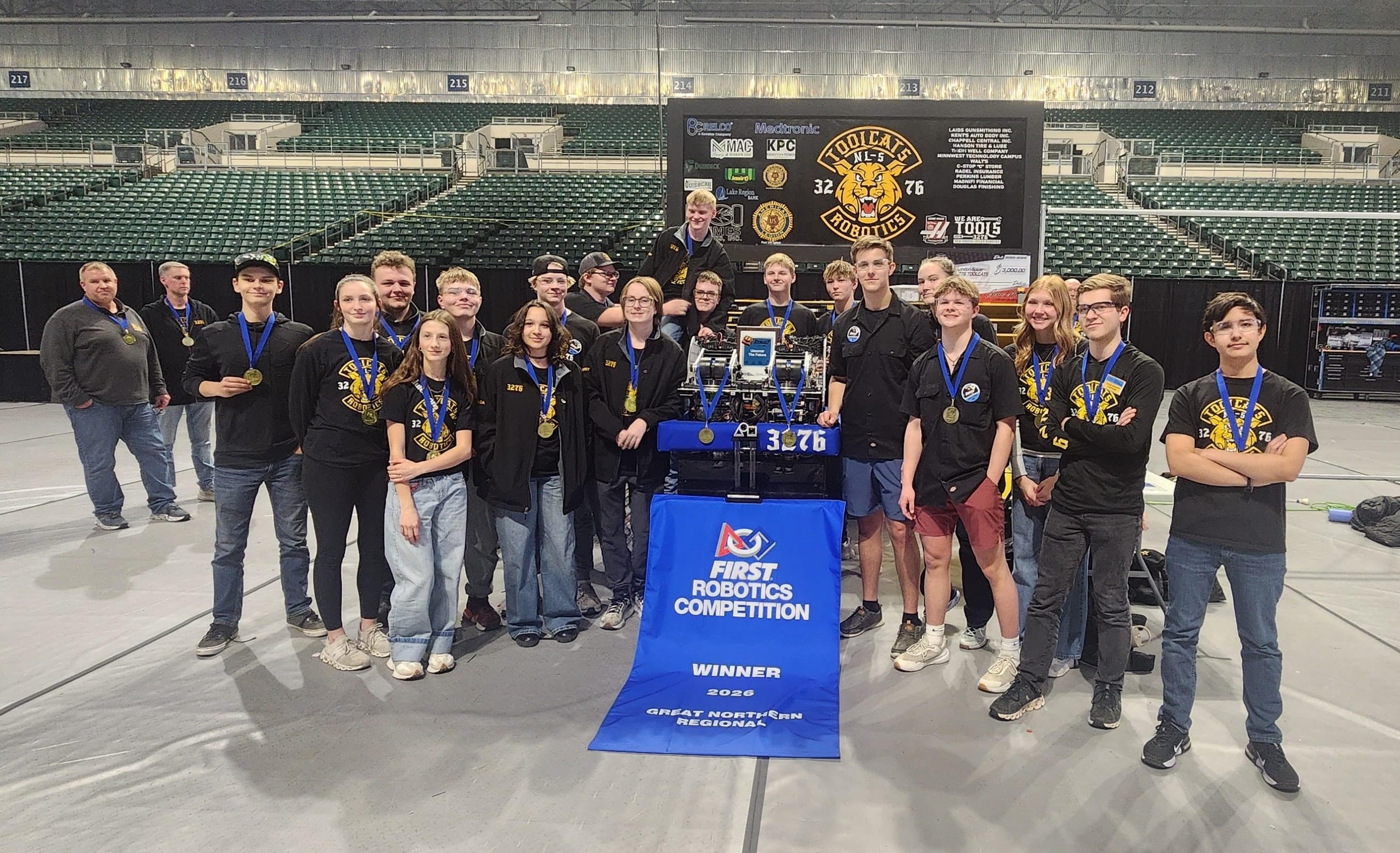
They leaned on their family. And then, quietly — in the same spirit in which their son had always done things — they made donations to various causes that had a positive impact on Micah’s life and that he cared deeply about. The New London-Spicer robotics program was one of them.
“It’s not about the money,” Guy said plainly. “To me, that’s not the focus at all. The gift that you’re giving back to us is keeping Micah’s memory alive — the life, the legacy that he lived.”
And what a legacy it is.
A life, however short, well lived
Micah was diagnosed with a rare form of muscular dystrophy at age six, the same year his family moved to Spicer. The disease progressed slowly but relentlessly, moving from his legs to the rest of his body, eventually taking his mobility and, near the end, even his facial expressions. What it never touched was his mind, his humor, or his instinct to give.
Former NL-S teacher, Joyce Friedrich, said it perfectly, “of all the things Micah accomplished during his abbreviated time with us, his imprint on others left an enduring impact. The way he lived his life with the challenges put before him was a true testament of perseverance.”
When Micah transitioned to high school at NL-S, he arrived the same year the school’s robotics program was being born. Andy Paulson, then shop teacher, launched the program, and Micah was in his very first class. In fact, he and his family were part of what helped shape it.
Paulson, who still coaches robotics in Perham, said Micah taught him to see every person as an individual and help them become their best — and that, he added, had made him a better teacher.
Guy Chetrit, an engineer himself, mentored the NLS robotics team for several years alongside his son. He describes the program as one that opens doors for students who might otherwise go unnoticed — kids who aren’t the star athletes, who are drawn to videography or marketing or technical problem-solving, who need a place where those things matter. “It really is a program that caters to a variety of students,” he said. “It suited Micah because of his physical limitations, and he was able to flourish there.”

In many ways, robotics gave Micah exactly what he needed—a place where physical limitations mattered less than creativity, problem-solving and persistence. The Chetrit’s both agreed that the program is an incredibly influential one, “The robotics program helped students discover who they were and where they were going.”
And it’s still opening doors for kids who need it. That, the Chetrits would tell you, is exactly why it still has a special place in their hearts.
Micah went on to achieve Eagle Scout rank at 16, compete at State in MathCounts, and earn MVP honors with the NLS robotics team. But Guy is quick to say those accomplishments are only part of the picture. The harder part — the part he’s most proud of — is watching his son figure out how to compensate and continue to live his life fully.
“As the disease progressed,” Guy said, “he really leaned into his intellect. That’s where his strength was, and that’s where he thrived.” When Micah could no longer walk safely in a crowded school hallway, he moved to a mobility scooter. But even as the disease slowly stole his physical abilities, it was never able to touch his spirit.

And when the disease eventually stole his facial expressions, he leaned harder on his words and his humor. NL-S literature teacher Abigail Duly shared a seemingly small moment that shows just that, “On his first day in class with his mobility device, he hit the doorframe and said, ‘I just wanted to let you know I’m here—I didn’t see a doorbell.’”
Micah Orr Chetrit graduated from NLS in 2013 and from Minnesota State University Mankato in 2017 with a Bachelor’s Degree in Electrical Engineering, graduating summa cum laude. He was hired by IBM out of a career fair before he even finished his senior year, and went on to work in the company’s microprocessor design group in Rochester — at the leading edge of large-frame computer architecture.
A spirit of strength and giving
Despite his challenges, he insisted on living independently, in his own home, in a wheelchair, in a city an hour from his parents. “He insisted on independence. Even in a wheelchair, he lived on his own and built his own life” both Cyndi and Guy explained.
After he graduated and began earning a salary at IBM, Micah quietly supported multiple charities and helped individuals in ways his family only learned about after his passing. It was simply how he operated — generosity as a habit, not a grand gesture.
“He wanted to make people’s lives better, even behind the scenes,” Cyndi recalled. “We heard that from many people. He really came alongside people, quietly, most of the time. With a very generous heart.”
After he passed, the messages came pouring in. From teachers who had quietly been affected by having known him. From classmates and competitors who flew in from California, Utah, and Indiana for his celebration of life. From parents in the community who told Guy and Cyndi what their son had meant to their children — things Micah had never mentioned to his own family.
Cyndi said. “It helps us go through this grieving process to know that he really made a difference.”
The family hopes the donation and Micah’s story will encourage others to support the fund, as well as encourage people throughout the community. But everything else aside, they’ve described already receiving so much more than they’ve given. “The gift to us is that people are telling his story—that his legacy continues.”
And giving was simply part of who he was.
Although the disease took things from him gradually — first his ability to walk safely, then his mobility, eventually even his facial expressions — what it never managed to take was his mind, his humor, or his deep instinct to look after the people around him.
Overall, the hope is that Micah’s story encourages others—especially young people—to pursue their passions, to persevere and to become who they are meant to be. Because that is exactly what Micah did.
In a life marked by challenge, he built something lasting: connection, inspiration and a quiet, enduring light.
And for those who knew him—or are just now hearing his story—that light will remain.